
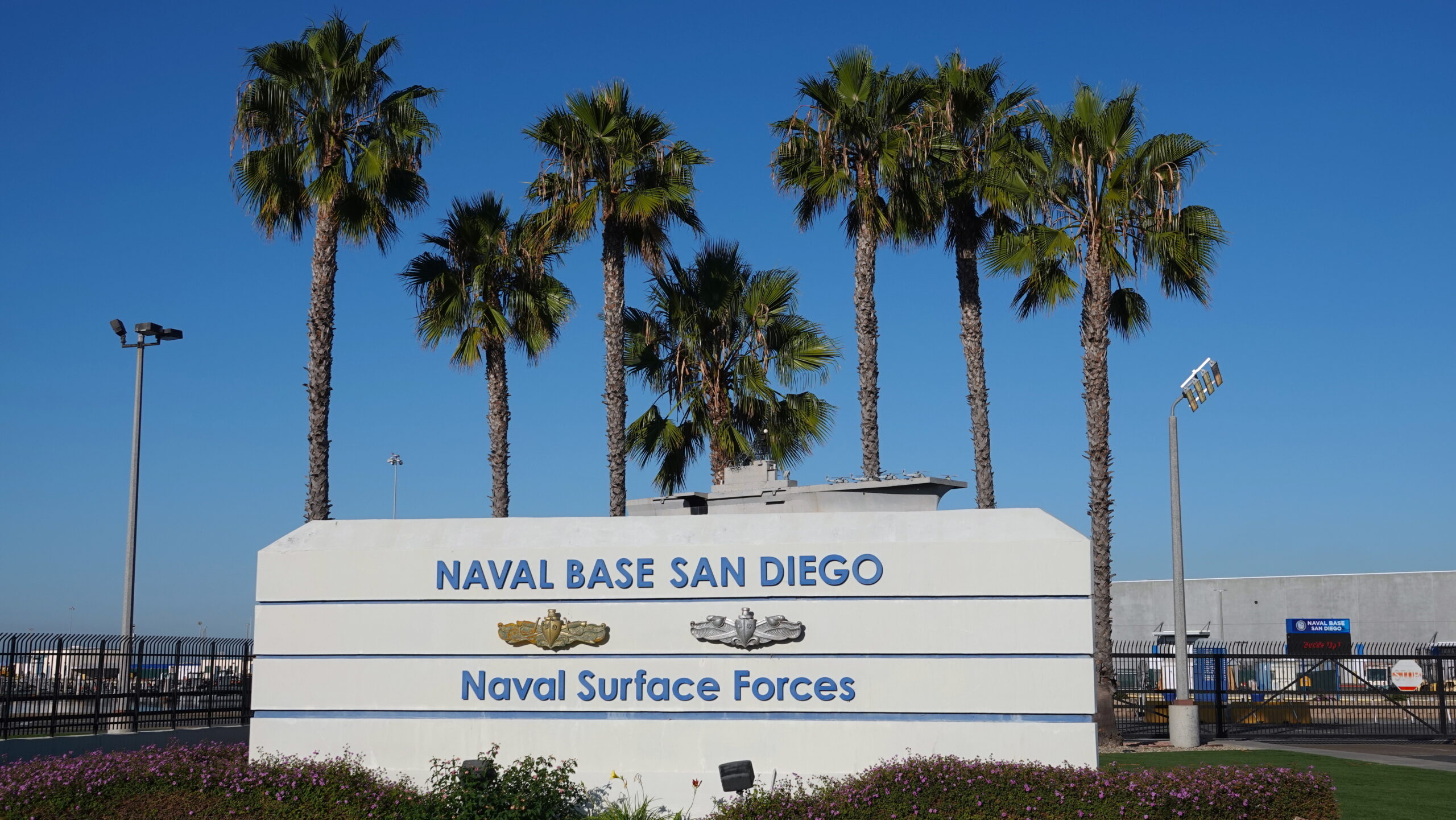
Navy Divorces in San Diego
San Diego is home port to a large share of the Pacific Fleet, which means Navy divorces are handled here more often than almost anywhere in the country. That familiarity matters, because a Navy case rarely runs on a normal timeline.
A sailor’s availability is set by a deployment cycle, not a work calendar. Sea duty and shore duty rotations move a parent in and out of the home for months at a stretch. Legal residence, home of record and duty station are frequently three different places. And a single-parent sailor or a dual-military couple has obligations to the command that a civilian parent simply does not have.
Everything below deals with the parts of a divorce that are specific to Navy service. For the issues that apply across every branch, including pension division, TRICARE eligibility and the federal ten-year thresholds, see our San Diego military divorce attorneys page.
How to File for Divorce in the Navy
Filing for a divorce in San Diego follows California divorce laws, but there are special rules and protections for active-duty service members under the Servicemembers Civil Relief Act (SCRA). If you or your spouse are stationed at Naval Base San Diego, NAS North Island, or another nearby installation, you have options for where to file:
- Residency Requirements: In most cases, you can file in California if you or your spouse are stationed in the state, even if you maintain residency elsewhere.
- Deployment Considerations: If you’re deployed, the SCRA can delay proceedings until you are able to participate fully.
- Service of Process: Military procedures must be followed to properly notify the active-duty spouse.
Having a San Diego divorce attorney familiar with Navy divorce procedures ensures your rights are protected from day one.
Where you file depends on residency, and for Navy families that is rarely obvious. A sailor may be homeported at Naval Base San Diego, hold legal residence in another state for tax purposes, and have a home of record somewhere else again. A spouse living in San Diego while the sailor is deployed may have an independent basis to file here.
Most Navy families in the county are attached to one of four installations: Naval Base San Diego on 32nd Street, Naval Air Station North Island and Naval Base Coronado across the bay, and Naval Base Point Loma. Which command a sailor is attached to affects practical questions like how papers get served and how quickly a response is realistic.
Service members also have protection against being defaulted while genuinely unable to respond. The Servicemembers Civil Relief Act allows proceedings to be paused when duty prevents participation, and how that works in practice is covered in how SCRA protections affect divorce timelines and default judgments.
Navy Legal Service Office Southwest can provide legal assistance on some matters but cannot represent either spouse in the divorce itself, which is why most Navy families retain private counsel. The underlying steps are the same as any San Diego divorce, with military-specific timing layered on top.
Navy Divorce and Child Custody
Child custody in a San Diego Navy divorce can be especially complicated due to deployment schedules and potential duty station changes. California courts prioritize the best interests of the child while also recognizing the unique service obligations of Navy parents.
- Parenting Plans: These must account for long absences, virtual communication, and temporary care arrangements.
- Military Family Care Plans: Required for active-duty parents to outline who will care for children during deployments.
- Relocation Issues: Moves required by the Navy may require custody modifications.
At Fair Cadora, we craft custody agreements that meet California’s legal standards while accommodating the realities of Navy life.
This is where Navy service changes a case most.
A standard custody schedule assumes both parents are in town most weeks. Sea duty makes that impossible. A deployment can remove a parent for six to nine months, and the workups beforehand are almost as disruptive. A schedule that works during shore duty can fail completely once the rotation changes.
Four things that hold up in practice:
Build two schedules, not one. A shore-duty schedule and a deployment schedule, with a written trigger for switching between them, so nobody is renegotiating at short notice.
Address the return, not just the departure. Reintegration after a long deployment is often harder than the absence. A plan that steps parenting time back up gradually causes less conflict than one that snaps back overnight.
Write the video contact terms down. Windows that account for time zones and shipboard connectivity are worth specifying rather than leaving to goodwill.
Deal with the Family Care Plan. Single-parent sailors and dual-military couples are required to keep one on file with the command. It is not a custody order and it does not bind a family court, but it needs to be consistent with your parenting orders or you create problems in both directions.
Build your California parenting plan to compare schedules against a calendar before you propose anything, then have counsel translate it into court language.
For the wider questions, see how deployment, PCS orders and overseas assignments affect parenting time, and note that child support calculations treat allowances like BAH and BAS differently from base pay. Our San Diego child custody attorneys handle the orders themselves.
Navy Divorce and Spousal Support
Spousal support in a Navy divorce is calculated the same way as any California case: guideline for temporary support, and the Family Code factors for long-term orders. The complication is income. Allowances such as BAH and BAS are treated differently from base pay, and a spouse who has relocated repeatedly for the service often has a weaker earning record as a result.
See spousal support for how California calculates it, and options for military spouses who have paused careers for how that history is argued.
Dividing Military Benefits in a San Diego Navy Divorce
Pension division, TRICARE, the Survivor Benefit Plan and the federal ten-year thresholds work identically across every branch, and they are where Navy families are most often given wrong information. The most common error is assuming a pension is only divisible after ten years of marriage. That is not what the rule says.
Full detail is on our San Diego military divorce attorneys page, with how military pensions and retirement benefits are divided and pension division when the marriage is shorter than ten years covering the specifics. The wider marital estate is dealt with under property division.
How Long Does a Navy Divorce Take?
California’s six-month waiting period applies to every divorce, Navy or not. What changes in a Navy case is everything around it: serving a deployed sailor, SCRA stays, and scheduling hearings around underway periods.
Timing in a military divorce covers this in full.
Why Choose Fair Cadora for Your San Diego Navy Divorce
At Fair Cadora, our team of experienced divorce and family law attorneys have experience representing both service members and spouses in Navy divorce cases. Our team understands the intersection of California family law and military regulations, including:
- Division of military pensions and benefits.
- Compliance with federal laws like the SCRA and USFSPA.
- Addressing deployment-related custody challenges.
Whether you’re currently serving, recently separated from the Navy, or married to someone in the Navy, we provide clear guidance, strong advocacy, and personalized strategies tailored to your case. Contact Fair Cadora today to schedule a consultation and take the first step toward protecting your rights.
Fair Cadora, APC
Address: 9635 Granite Ridge Dr #150, San Diego, CA 92123, United States
Phone: +1 619-255-8500
Opening Hours:
Mon – Fri 8:30 a.m.–5 p.m.
